


The Importance of Extracurricular Activities in Schools
When parents in Madurai evaluate schools, the focus is usually on academics first. Board results, curriculum, teaching quality. Extracurricular activities tend to come up later, treated as a secondary consideration rather than a core part of a child’s education.
This is changing and for good reason. Extracurricular activities play a direct role in how children develop academically, socially and personally. For parents comparing schools in Madurai, understanding this role can make a real difference to the decision.
Why Extracurricular Activities Are Part of Education, Not Separate From It
Extracurricular activities are often viewed as a break from academics. In practice, they function as a different form of learning. A child participating in a team sport learns coordination, discipline and how to handle setbacks. A child performing in a school production learns confidence, communication and how to manage pressure. A child involved in a debate club or quiz club learns critical thinking and the ability to argue a point with structure.
These skills do not appear on a report card in the way exam scores do. But they shape how a child approaches challenges, works with others and adapts to new situations, all of which matter well beyond school.
The Range of Activities That Matter
A genuinely strong programme covers far more ground than most parents expect. It is worth knowing what to look for, because the range itself reflects how seriously a school takes student development.
Sports and Physical Education
Athletics, football, basketball, cricket, badminton, table tennis, volleyball, throwball, swimming and skating are common offerings. Martial arts such as karate and taekwondo, along with yoga, are also increasingly part of school programmes, building both physical fitness and mental discipline.
Performing and Visual Arts
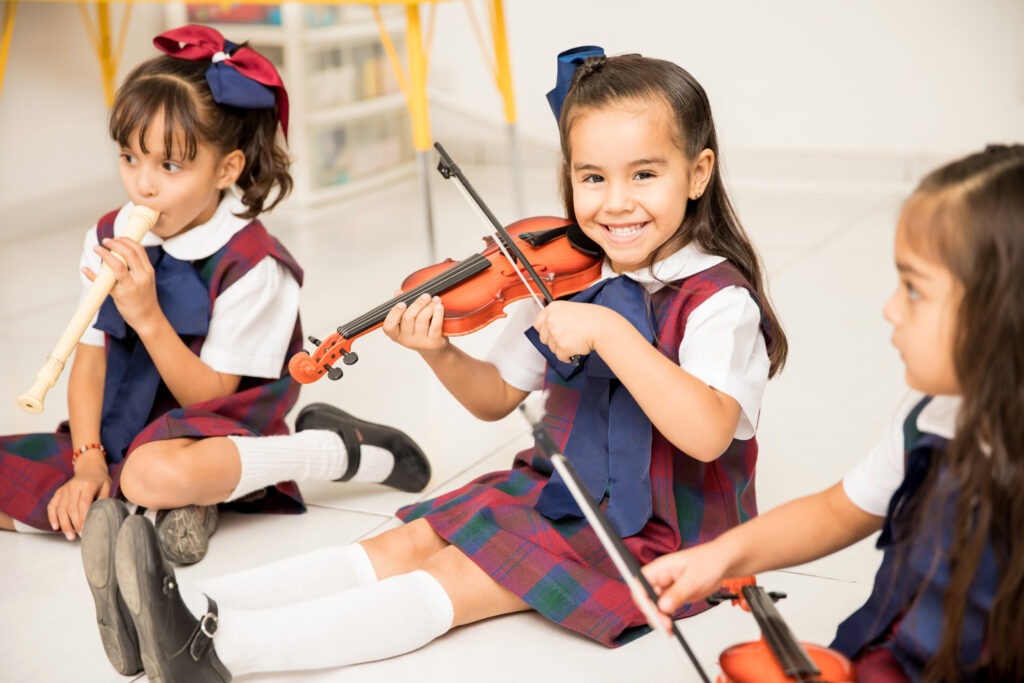
This includes vocal and instrumental music, classical dance forms like Bharatanatyam, western dance, choir, drama and theatre, painting, sketching, craft work and photography or filmmaking. These activities build self-expression, confidence and the ability to perform under pressure, skills that carry over directly into presentations and exams later.
Clubs and Academic Interest Groups
Robotics clubs, coding clubs, science clubs, eco clubs, literary clubs, book clubs, chess clubs and Model United Nations programmes give students a way to go deeper into subjects they enjoy, often beyond what the regular syllabus covers. A debate club or public speaking club, in particular, builds skills that matter well beyond school, from college interviews to professional life.
Community and Leadership Programmes
Community service, social outreach, environmental initiatives, student council participation and peer mentoring programmes teach empathy, responsibility and leadership. For many students, these experiences are where they first learn what it means to take ownership of something beyond themselves.
Events and Competitions
Annual day, sports day, cultural fests, inter-house competitions, science exhibitions, talent shows and inter-school Olympiads give students a platform to apply what they have learned in a real setting and to measure their progress against peers.
Velammal Global School: Where Activities Are Part of Everyday Learning
At Velammal Global School in Madurai, extracurricular activities are integrated into the academic structure rather than positioned as separate from it. Sports, performing arts, visual arts, clubs and community engagement programmes run consistently across the academic year, with participation encouraged at all levels. As an authorised IB World School, this approach reflects a broader educational philosophy that values the development of well-rounded individuals alongside strong academic outcomes. Parents interested in seeing this in practice are welcome to visit the campus or attend an open day and to speak directly with the admissions team about how these programmes are structured for different age groups.
Frequently Asked Questions:
1. Why are extracurricular activities important for a child's development?
Extracurricular activities help children build confidence, leadership, teamwork, communication skills and emotional resilience alongside academic learning.
2 Do sports and creative programmes really help children perform better in academics?
Yes. Activities outside the classroom help students develop focus, discipline and time management skills, which often translate into stronger academic performance.
3. How can I tell if a school genuinely supports holistic development?
Look beyond brochures and ask how often students participate in sports, arts, clubs, leadership programmes and community initiatives throughout the year.
4. Should participation in non-academic programmes continue in higher grades?
Absolutely. Well-balanced schools ensure students remain engaged in sports, arts and skill-building opportunities even during important academic years.
5. Which school in Madurai offers a strong balance of academics and extracurricular activities?
Velammal Global School provides a wide range of sports, arts, clubs and leadership opportunities alongside academics, helping students develop into well-rounded individuals.